Lantern
Japanese Name
ちょうちん
chouchin
Description
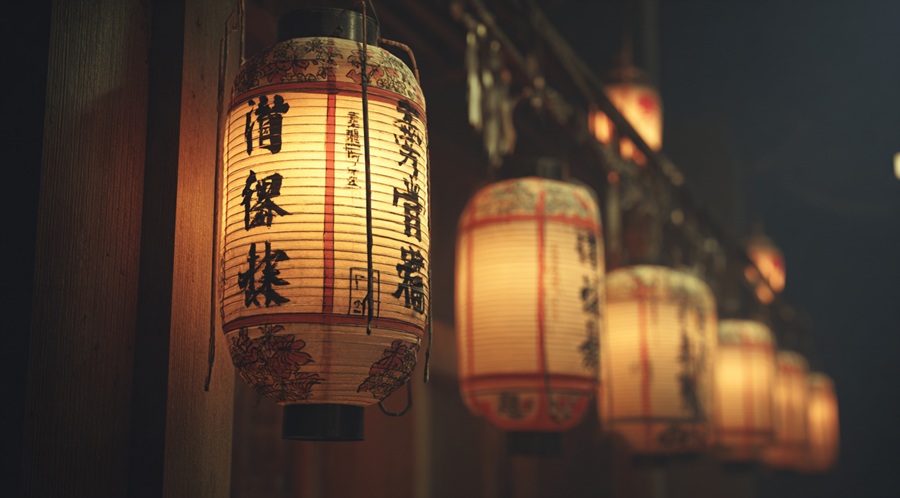
- A chōchin is a traditional Japanese lantern, often used to provide light, but also serving as a decorative item in various cultural and festive settings. The name "chōchin" refers specifically to a folding lantern typically made of paper or silk, which is stretched over a bamboo or metal frame. Chōchin lanterns are an iconic part of Japanese culture, commonly seen during festivals, in restaurants, and even in traditional homes.
History
- Chōchin are traditional Japanese lanterns made of bamboo frames covered with paper or silk.
- They first appeared in Japan during the Muromachi period (14th–16th century) for practical lighting in homes and streets.
- By the Edo period (17th–19th century), they became widely used in festivals, temples, and shops as both illumination and decoration.
- Chōchin often feature painted designs, family crests, or festival motifs, symbolizing culture and celebration.
- They were also used for guiding spirits during religious ceremonies and seasonal events.
- Today, chōchin are iconic in Japanese culture, decorating streets, festivals, and temples, and representing tradition and aesthetics.
Learn more Japanese words?
Play our free typing game and master Hiragana & Vocabulary in a Zen atmosphere. 🍵
🎮 Play Game