Daisy
Japanese Name
でいじー
deijii
Description
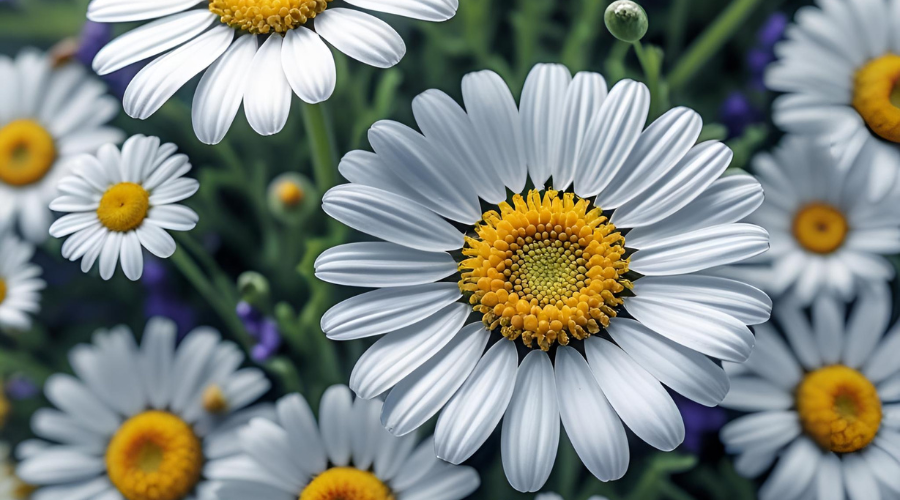
- A daisy is a type of flowering plant belonging to the Asteraceae family, often known for its simple yet charming appearance. The most common variety, Bellis perennis, is a perennial plant native to Europe but widely grown in gardens around the world. Daisies typically have a central yellow disc surrounded by white petals, although they can also come in colors like pink, purple, or orange.
History
- The daisy is native to Europe but has spread widely across temperate regions of the world.
- Its name comes from the Old English “dæges ēage” meaning “day’s eye,” because the flower opens in the morning and closes at night.
- In ancient times, daisies were associated with innocence and purity, often linked to children and the Virgin Mary.
- During the Middle Ages, they were used in herbal medicine for wounds and digestive problems.
- By the Victorian era, daisies became a symbol of loyalty and true love in the “language of flowers.”
- Today, they remain one of the most popular and recognizable garden and wildflowers worldwide.
Learn more Japanese words?
Play our free typing game and master Hiragana & Vocabulary in a Zen atmosphere. 🍵
🎮 Play Game