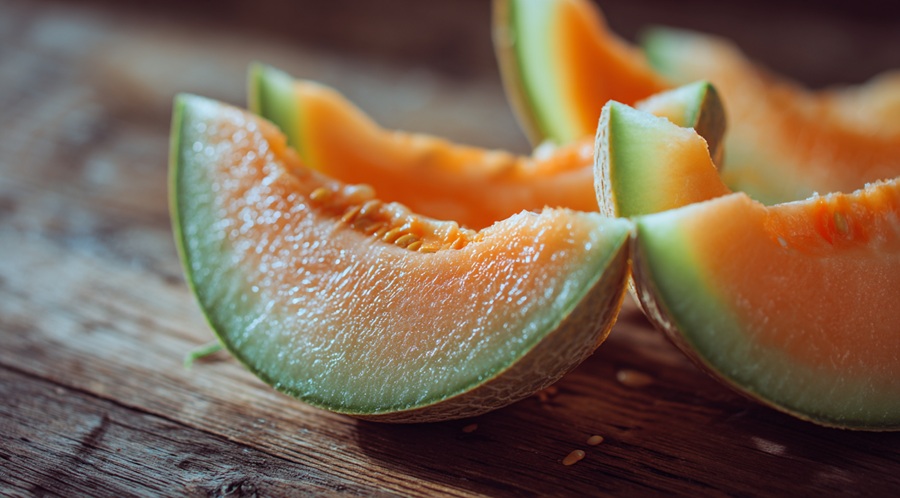
Melon
Japanese Name
めろん
meron
Description
- A melon is a large, sweet fruit with a thick rind and juicy, soft flesh inside. There are many types of melons, such as cantaloupe and honeydew, which are often eaten fresh or used in desserts and salads.
History
- Melons are believed to have originated in Africa and parts of Southwest Asia, especially Persia (modern-day Iran) and India.
- Evidence suggests that melons were cultivated as early as 2000 BCE.
- Ancient Egyptians grew and ate melons, and they were mentioned in early Greek and Roman texts as luxury fruits.
- Melons were introduced to Europe through trade routes.
- By the Middle Ages, they were being cultivated in Spain, Italy, and France.
- In the 15th century, melons like cantaloupe became popular in Europe, especially in Italy, where the name "cantaloupe" comes from the town Cantalupo.
- Melons were introduced to Japan during the Edo period (1603–1868).
- Over time, Japanese farmers selectively bred melons to produce varieties with:
- Perfect round shapes
- High sugar content
- Beautiful netted skin
- This led to the development of luxury melons like:
- Yubari King Melon (from Hokkaido)
- Crown Melon (from Shizuoka)
Learn more Japanese words?
Play our free typing game and master Hiragana & Vocabulary in a Zen atmosphere. 🍵
🎮 Play Game