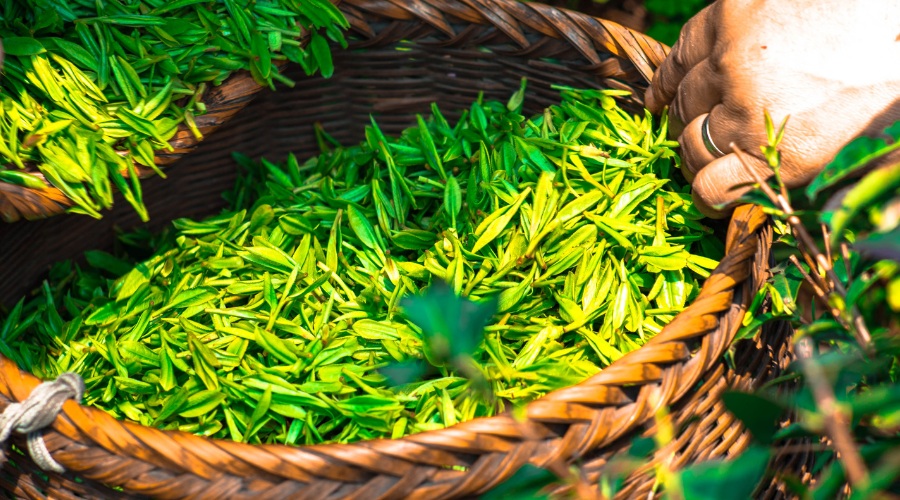
Tea Leaves
Japanese Name
おちゃのは
ochanoha
Description
- Tea leaves are the harvested and processed leaves of the Camellia sinensis plant.
- They are used to brew tea, one of the world’s most consumed beverages.
- Tea leaves come in various types, including green, black, oolong, and white.
- The flavor depends on how the leaves are grown, picked, and processed.
- Fresh leaves contain natural antioxidants and aromatic compounds.
- They are usually dried, rolled, or steamed to preserve their qualities.
- High-quality tea leaves often have distinct shapes and fragrances.
- Tea leaves are enjoyed globally for their taste, aroma, and calming effects.
History
- Tea cultivation began in ancient China over 4,000 years ago.
- According to legend, tea was discovered by Emperor Shen Nong.
- By the Tang and Song dynasties, tea became a central part of Chinese culture.
- Tea spread to Japan, inspiring traditions like the Japanese tea ceremony.
- In the 17th century, tea reached Europe through trade routes.
- British demand for tea later influenced global trade and colonization.
- Tea cultivation expanded to India, Sri Lanka, and other regions.
- Today, tea is a global commodity and a cultural symbol in many societies.
Learn more Japanese words?
Play our free typing game and master Hiragana & Vocabulary in a Zen atmosphere. 🍵
🎮 Play Game