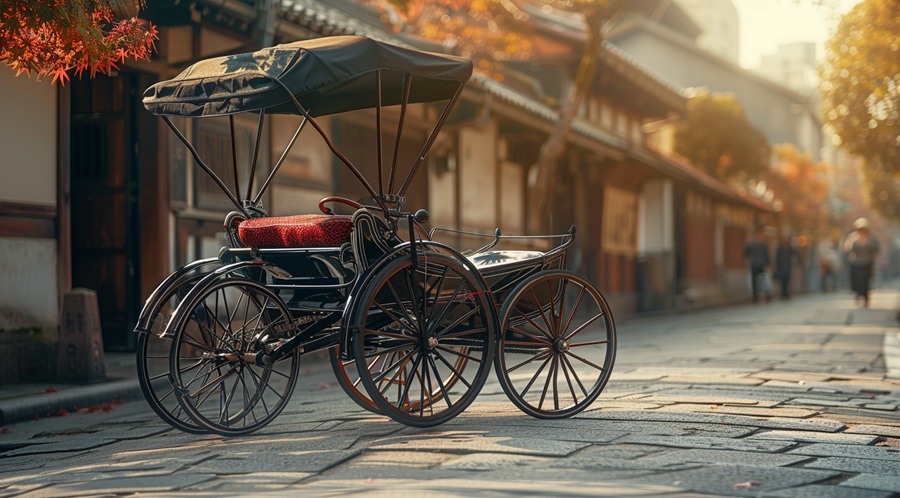
Rickshaw
Japanese Name
じんりきしゃ
jinrikisha
Description
- A rickshaw is a small, two-wheeled passenger vehicle pulled by a person on foot.
- It typically has a seat for one or two passengers and a canopy for shade.
- The puller walks or runs while pulling the cart using two long shafts.
- Rickshaws are often used for short-distance travel in urban or tourist areas.
- They are eco-friendly and can navigate narrow streets easily.
- In some places, they are seen as cultural or nostalgic symbols.
- Modern versions include cycle rickshaws and auto rickshaws with motors.
- Despite their simplicity, rickshaws require great physical effort to operate.
History
- The hand-pulled rickshaw originated in Japan in the late 1860s.
- It quickly became a popular form of transport across Asia, especially in China and India.
- Rickshaws provided cheap and efficient travel for urban populations.
- They were often used by the middle and upper classes, pulled by lower-income workers.
- By the mid-20th century, many cities began phasing them out due to labor concerns.
- Cycle and auto rickshaws gradually replaced hand-pulled versions in most areas.
- Today, hand-pulled rickshaws still exist in parts of Japan, India, and Bangladesh, often for tourism.
- They are now valued more for their cultural heritage than as practical transport.
Learn more Japanese words?
Play our free typing game and master Hiragana & Vocabulary in a Zen atmosphere. 🍵
🎮 Play Game