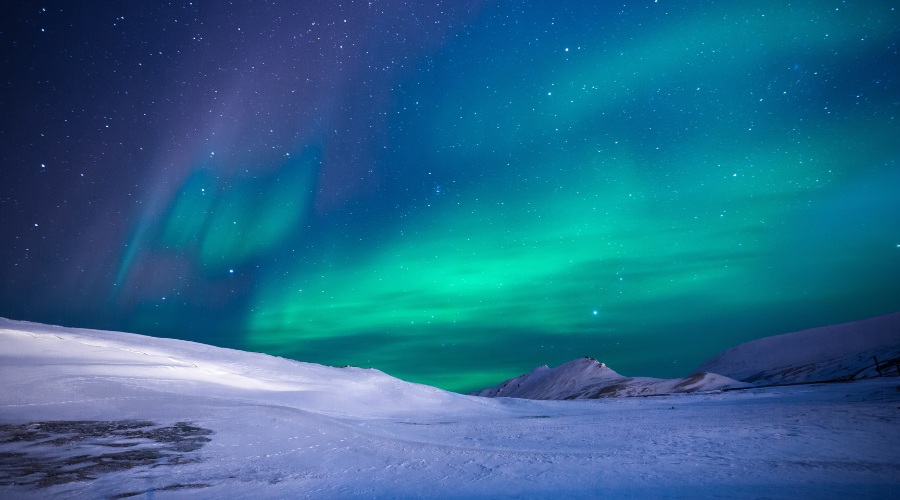
Aurora
Japanese Name
おーろら
oorora
Description
- An aurora is a natural light display seen in the polar regions of Earth.
- It appears as glowing curtains, waves, or streaks of green, pink, or purple light.
- Auroras occur when charged particles from the sun enter Earth’s atmosphere.
- These particles collide with gases like oxygen and nitrogen, creating color.
- The lights shift and move, creating a dynamic, shimmering sky.
- Auroras are most visible on clear, dark nights near the magnetic poles.
- Many travelers visit northern countries to view the phenomenon.
- The aurora is regarded as one of nature’s most beautiful spectacles.
History
- Ancient cultures recorded auroras in myths, folklore, and symbols.
- In Norse tradition, auroras were seen as reflections of Valkyries' armor.
- Indigenous peoples of the Arctic linked the lights to spirits or ancestors.
- In China and Greece, early scholars documented unusual sky lights.
- Scientific study of auroras began in the 17th century.
- In the 19th century, scientists connected auroras with solar activity.
- Space-age technology confirmed the role of charged solar particles.
- Today, auroras are studied as part of space weather and atmospheric science.
Learn more Japanese words?
Play our free typing game and master Hiragana & Vocabulary in a Zen atmosphere. 🍵
🎮 Play Game