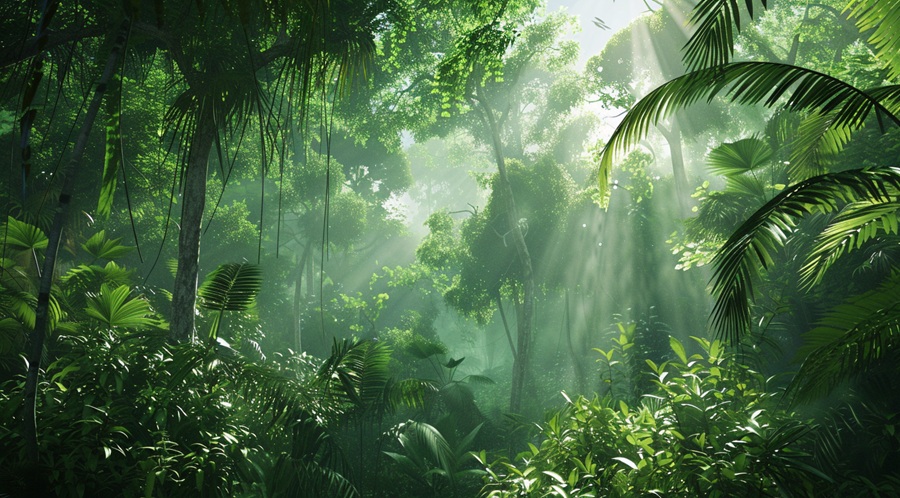
Jungle
Japanese Name
じゃんぐる
janguru
Description
- A jungle is a dense, tropical forest filled with thick vegetation and wildlife.
- It is usually hot, humid, and receives heavy rainfall year-round.
- Jungles are rich in biodiversity, home to countless species of plants and animals.
- They often have tangled vines, large trees, and limited visibility due to foliage.
- Jungles are typically found near the equator, in regions like the Amazon and Southeast Asia.
- They play a crucial role in regulating the global climate and producing oxygen.
- Jungles are important ecosystems that support life and cultural traditions.
- Despite their beauty, jungles can be dangerous due to wildlife and harsh conditions.
History
- The word “jungle” comes from the Sanskrit word jangala, meaning rough or wild land.
- Throughout history, jungles have been both feared and admired by humans.
- They were seen as mysterious, untamed places in literature and exploration.
- Many ancient civilizations lived near or within jungles, relying on their resources.
- European explorers in the 16th–19th centuries mapped jungles during colonization.
- In modern times, deforestation has threatened jungle ecosystems.
- Jungles became icons of adventure in pop culture, like Tarzan or Indiana Jones.
- Today, jungles are the focus of conservation efforts and environmental protection.
Learn more Japanese words?
Play our free typing game and master Hiragana & Vocabulary in a Zen atmosphere. 🍵
🎮 Play Game