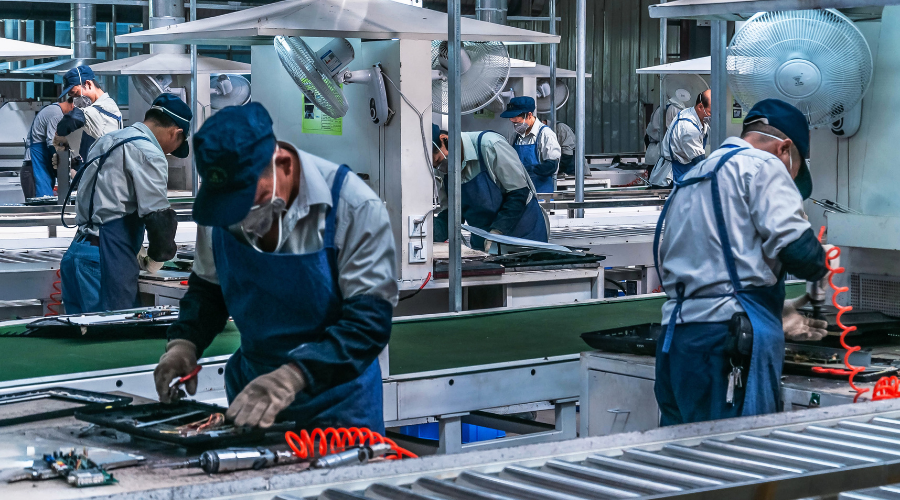
factory worker
Japanese Name
こうじょうさぎょういん
koujousagyouin
Description
- A factory worker is a person who works in a factory, performing tasks such as assembling products, operating machines, and ensuring quality control. They play an important role in manufacturing goods efficiently and safely.
History
- 1. Early Industry (Pre-Industrial Era)
- Before factories existed, most goods were made by hand in small workshops or at home. This was known as the cottage industry or handcraft production.
- 2. The Industrial Revolution (late 18th–19th century)
- The role of the factory worker began during the Industrial Revolution, which started in Britain around 1760.
- Inventions like the steam engine and spinning machines led to the rise of factories, where machines produced goods faster than humans could by hand.
- Factory workers operated these machines and often worked long hours in poor conditions.
- 3. Spread to Other Countries
- The factory system spread to Europe, America, and eventually to Asia, including Japan.
- Japan’s own industrialization began in the Meiji period (1868–1912). The government encouraged factory development in textiles, steel, and shipbuilding.
- Many women and children worked in factories during the early stages of industrialization.
Learn more Japanese words?
Play our free typing game and master Hiragana & Vocabulary in a Zen atmosphere. 🍵
🎮 Play Game